
Holders of ordinary passports from 29 countries can enter China visa-free under bilateral mutual-exemption agreements[1]; a further 50 countries are covered by China's unilateral visa-free policy[2]. The table below lists all 79 countries whose ordinary-passport holders may enter China without a visa. Most of them can stay up to 30 days per visit — this includes Canada, the United Kingdom, France, Germany, Italy, Russia, most of Europe, Japan and South Korea. Most current unilateral policies expire on December 31, 2026; judging by the pattern of every previous extension, they are generally expected to be renewed before then. China also runs a 240-hour (10-day) visa-free transit programme for citizens of major Western countries, including the United States — but only for travellers holding a connecting ticket with confirmed dates and seats, transiting through China to a third country or region (Hong Kong, Macao and Taiwan included)[3]. If you have a genuine emergency, a port visa can be arranged on arrival, regardless of nationality[4].
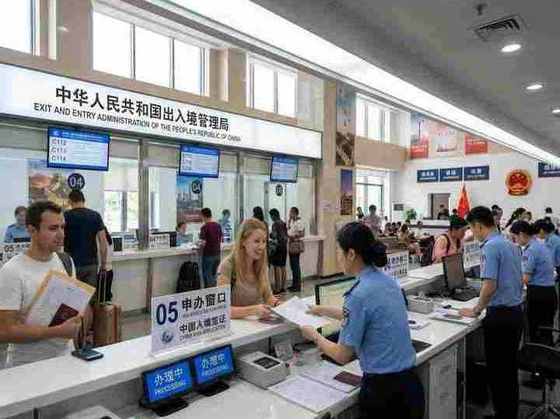
If you entered visa-free, had your tests, and then discovered that treatment is needed — there is no need to leave China. You can apply for a “stay permit” at the local Exit-Entry Administration Bureau instead[6]. This permit exists precisely for travellers who entered visa-free and have a legitimate reason to remain longer. The documentation standard is the same as for an S2 visa (hospital diagnosis, invitation letter, and so on), and the length granted is set by the approving authority according to your treatment needs. If you still need more time when it expires, you can apply for a renewal or a further extension.
Medical treatment, however, is not covered by any of these special entry programmes. If you have already decided to come to China for treatment before you travel, the correct route is an S2 visa (private affairs, which includes medical care), applied for at a Chinese embassy or consulate before you leave. An S2 visa allows a stay of up to 180 days per entry[5]; if your treatment runs longer, you can apply locally to extend by up to 90 days at a time — enough for the vast majority of treatment plans. We prepare the supporting documents for you; you simply follow the consulate's application process.
Citizens of countries with no visa-free access — and there are many — most often enter on a family-visit or tourist visa, discover during a check-up that treatment is needed, and then apply domestically to the Exit-Entry Administration Bureau to change the purpose of stay[7], convert to an S2 visa, or extend their stay. With the right paperwork, this works.
Medical travel to China is in line with the government's current open-door policy and is welcomed. Bureau officials are normally accommodating, and most applications are decided within seven working days. But do not leave it to the last day. Overstaying a visa or stay permit[8] is handled in tiers: an overstay of 10 days or less on a visa usually draws a warning; beyond that, from day 11, you face a fine of RMB 500 per day (capped at RMB 10,000); overstays beyond 60 days can bring 5 to 15 days of detention. Visa-free entrants get no warning period — one day over is RMB 500 per day (capped at RMB 10,000), and at 20 days detention becomes possible. In our experience, Chinese exit-entry officials are courteous, professional and efficient. Compared with many other government offices, they show little bureaucracy and have no incentive to make life difficult for a sick patient. Even so: don't delay, and don't mislead. Treat the rules with respect and you will have no problem.
We can run the domestic change-and-extension paperwork for you — far less hassle than dealing with a consulate yourself. Our one honest caveat: if medical treatment in China is your primary purpose, the most compliant route is to obtain an S2 visa at a consulate before you travel.
This page was compiled from the Chinese government's published official policies and was last updated on October 17, 2026. We do not provide legal advice; for an authoritative interpretation of the rules, consult the official publications of the Ministry of Foreign Affairs and the National Immigration Administration, and ask their officers.
Entry to China Without a Visa
The table lists all 79 countries whose ordinary-passport holders can enter China visa-free. Most can stay 30 days per visit; a few mutual-agreement countries allow longer[9].
Americas (13)
| Country | Visa-free type | Expires |
|---|---|---|
| Canada | Unilateral | 2026-12-31 |
| Brazil, Argentina, Chile, Peru, Uruguay | Unilateral | 2026-12-31 |
| Ecuador | Mutual | Indefinite |
| Suriname, Barbados, Bahamas, Dominica, Grenada, Antigua and Barbuda | Mutual | Indefinite |
Europe (40)
| Country | Visa-free type | Expires |
|---|---|---|
| United Kingdom, France, Germany, Italy, Spain, Netherlands | Unilateral | 2026-12-31 |
| Belgium, Sweden, Switzerland, Austria, Ireland | Unilateral | 2026-12-31 |
| Portugal, Greece, Poland, Norway, Finland, Denmark, Hungary | Unilateral | 2026-12-31 |
| Romania, Bulgaria, Croatia, Slovakia, Slovenia | Unilateral | 2026-12-31 |
| Luxembourg, Cyprus, Iceland, Estonia, Latvia, Montenegro, North Macedonia, Malta, Andorra, Monaco, Liechtenstein | Unilateral | 2026-12-31 |
| Russia | Unilateral | 2027-12-31 |
| Belarus, Serbia, Albania | Mutual | Indefinite |
| Bosnia and Herzegovina, San Marino | Mutual | Indefinite |
Asia (18)
| Country | Visa-free type | Expires |
|---|---|---|
| Japan, South Korea | Unilateral | 2026-12-31 |
| Saudi Arabia, Kuwait, Bahrain, Oman | Unilateral | 2026-12-31 |
| Brunei | Unilateral | No expiry |
| Singapore, Thailand, Malaysia | Mutual | Indefinite |
| United Arab Emirates, Qatar, Maldives, Kazakhstan, Georgia | Mutual | Indefinite |
| Uzbekistan, Azerbaijan | Mutual | Indefinite |
| Armenia | Mutual | Indefinite |
Oceania & Africa (8)
| Country | Visa-free type | Expires |
|---|---|---|
| Australia, New Zealand | Unilateral | 2026-12-31 |
| Fiji, Tonga, Samoa, Solomon Islands | Mutual | Indefinite |
| Mauritius | Mutual | Indefinite |
| Seychelles | Mutual | Indefinite |
Note: Unilateral visa-free policies cover ordinary-passport holders entering for business, tourism, visiting family or friends, exchanges or transit; mutual exemptions follow the relevant bilateral agreements. A few countries allow stays longer than 30 days — see note 9 at the end of this page.
Visa Questions, Answered
Q1: I'm a US citizen. Can I enter China visa-free for medical treatment?
No. The United States is not on China's unilateral visa-free list (as of October 2026), so you must obtain a visa before travelling. The correct visa for treatment is the S2 (private affairs) visa. US citizens do fall under the 240-hour transit exemption, but that requires a connecting ticket to a third country — it does not apply when Shanghai is your final destination.
Q2: I'm a Canadian (or British, Australian) citizen with 30-day visa-free entry. Can I use it for my knee replacement?
You qualify for 30-day visa-free entry, but the permitted purposes are business, tourism, family visits, exchanges and transit — medical treatment is not among them. If the purpose of your entry does not match the visa-free category, border control may refuse entry; if you are planning more than 30 days of treatment, apply for an S2 visa before you travel. If you entered visa-free and later have a legitimate reason to change purpose or extend, you can apply to the Exit-Entry Administration Bureau — we can handle this for you.
Q3: What exactly is the 240-hour (10-day) visa-free transit?
It applies to citizens of 57 countries (including the United States, Canada and other major developed countries), but only to travellers transiting through China to a third country or region on a confirmed connecting ticket. A trip where Shanghai is the final destination does not qualify, and medical treatment is not one of the listed transit activities.
Q4: What documents do I need for an S2 medical visa?
Typically: a passport valid for at least six months, a completed visa application form with a photo, and an admission or intended-admission certificate from a Chinese medical institution. If family members are accompanying you for care, a nursing certificate from the same hospital and proof of kinship are usually required as well. Exact requirements vary by consulate — always check with the office processing your application.
Q5: What happens if I overstay, even by a few days?
The official line: an overstay of up to 10 days on a visa is a warning (visa-free entrants get no warning period); beyond that, fines accrue daily (RMB 500 per day, capped at RMB 10,000). Serious cases — typically a visa overstay beyond 60 days, or a visa-free overstay beyond 20 days — can result in detention and deportation, plus a 1–5 year re-entry ban. Overstays are dealt with at exit by border control. Don't gamble — build buffer into your stay.
Q6: Does CliniVoyage guarantee my visa will be approved?
No. Issuance, validity and duration are decided case by case by consular or exit-entry officials. In the ordinary course we very rarely hear of anyone being refused. We coordinate hospital documents (treatment paperwork is issued by the hospital, not by CliniVoyage), prepare your S2 application materials and pre-check your file — but we never promise outcomes.
- List of Mutual Visa-Exemption Agreements (Consular Service of the Ministry of Foreign Affairs, updated May 29, 2026): China has concluded mutual visa-exemption agreements with 160 countries, of which 29 cover ordinary-passport holders (the rest apply mainly to diplomatic, service and courtesy passports). https://cs.mfa.gov.cn/zggmcgx/cgqzapecswlxk/ylb/202607/t20260716_11984014.html
- FAQ on the Unilateral Visa-Free Policy (Ministry of Foreign Affairs of the PRC, updated October 6, 2026): China grants unilateral visa-free entry to 50 countries for ordinary-passport holders, for business, tourism, family visits, exchanges or transit, up to 30 days per stay; Brunei has no expiry, Russia runs to December 31, 2027, and the remaining 48 countries to December 31, 2026. http://cs.mfa.gov.cn/lh/lhqz_149493/cjwd/
- National Immigration Administration, Transit Visa-Free Policy (updated August 20, 2026): 240-hour (10-day) visa-free transit for citizens of 57 countries, entering through 65 open ports in 24 provinces (autonomous regions and municipalities), staying no more than 10 days within the designated area, holding connecting tickets with confirmed dates and seats. The documents explicitly include China's Hong Kong SAR, Macao SAR and Taiwan region as “third country (region)” (per the Guide for Foreign Business Personnel Working and Living in China (2025), issued with the Ministry of Commerce). https://www.nia.gov.cn/n741440/n741577/c1731205/content.html
- Port Visa Guidelines for Foreigners (National Immigration Administration, issued April 22, 2024): foreigners with genuine humanitarian, business, emergency-repair or other urgent needs, or joining tour groups, may apply for a port visa (visa on arrival) at Chinese port visa authorities, regardless of nationality; a port visa allows one entry of up to 30 days, and the S2 (private affairs) category may be applied for on medical grounds. https://www.nia.gov.cn/News/news/content.jsp?id=1646207
- The S2 (private affairs) visa allows entry for private matters including medical treatment, with a stay generally not exceeding 180 days per entry; those who entered on an S2 visa for treatment and need to extend may apply, each extension not exceeding 90 days (Article 7, Guidelines for Foreigners Applying for Visas and Stay Documents, National Immigration Administration, April 22, 2024). Documents required for a medical S2 visa vary by consulate or visa centre, but usually include passport, application form, photo, and an admission or intended-admission certificate from a Chinese medical institution. https://www.nia.gov.cn/News/news/content.jsp?id=1646207
- Article 10(1), Guidelines for Foreigners Applying for Visas and Stay Documents: foreigners who entered visa-free and need to continue their stay for legitimate reasons may apply to the public-security exit-entry authorities for a stay permit, following the materials and procedures set out in Article 8 — the documentation standard is the same as for visa conversion (including hospital diagnosis certificates and invitation letters), the stay period is set by the approving authority according to the purpose, and the permit can be extended or renewed if more time is needed. https://www.nia.gov.cn/News/news/content.jsp?id=1646207
- Regulations of the People's Republic of China on the Administration of the Entry and Exit of Foreigners (State Council Decree No. 814, 2025 revision), Article 10: foreigners who need to extend a visa stay, convert their visa or apply for a stay permit must submit supporting documents related to the purpose and may proceed after approval. Article 8(1) of the Guidelines further clarifies that applications to convert to another visa (including the S2 private-affairs visa) on a change of purpose — with hospital diagnosis and other supporting documents — are processed when the reason is legitimate and the paperwork is complete. https://www.gov.cn/zhengce/zhengceku/202508/content_7036507.htm; https://www.nia.gov.cn/News/news/content.jsp?id=1646207
- Exit and Entry Administration Law of the People's Republic of China, Article 78: foreigners who stay illegally receive a warning; in serious cases, a fine of RMB 500 per day of illegal stay, capped at RMB 10,000, or 5 to 15 days of detention. Article 14 of the National Immigration Administration's Penalty Discretion Benchmarks for Violations of the Exit and Entry Administration Law (published August 3, 2023) applies the tiers: visa or stay-permit overstay of 10 days or less — warning; 10 to 60 days — RMB 500 per day from day 11 (capped at RMB 10,000) or 5 days' detention; over 60 days — RMB 10,000 fine or 5 to 15 days' detention. Visa-free overstays skip the warning tier: under 20 days — daily fine or 5 days' detention; 20 days or more — RMB 10,000 fine or 5 to 15 days' detention. https://www.nia.gov.cn/News/news/content.jsp?id=1593719; https://www.mps.gov.cn/n2255079/n6865805/n7355741/n7355768/c7726938/content.html
- A few mutual-agreement partners grant longer per-visit stays: Bosnia and Herzegovina, San Marino, Armenia and Ecuador up to 90 days per visit; Mauritius up to 60 days; Malaysia, Uzbekistan and Azerbaijan up to 30 days per visit, with no more than 90 days cumulative within any 180-day period. These follow the respective bilateral visa-exemption agreements.