Perhaps you have been to China, or at least thought about visiting — for work, for school, for the food — but perhaps never for medical reasons. Until we have experienced it for ourselves and our families, we have never thought of China as a medical destination either. And look at healthcare in the places where we used to live. In Canada, the median wait from a family doctor's referral to actual treatment is 28.6 weeks [1]. Orthopaedic surgery: 48.6 weeks. Neurosurgery: 49.9 weeks [1]. In the United States, care is fast but priced like a second mortgage: US$14,885 per person per year, the highest in the developed world [2]. Free but slow, or fast but ruinous — those used to be our two choices. China now offers a third: timely, effective medical care at a reasonable price.
1The medicine here is genuinely world-class now
Let's deal with the stereotype first: Chinese medicine = cheap but risky. Ten years ago, that caricature had a grain of truth. Today it's obsolete.
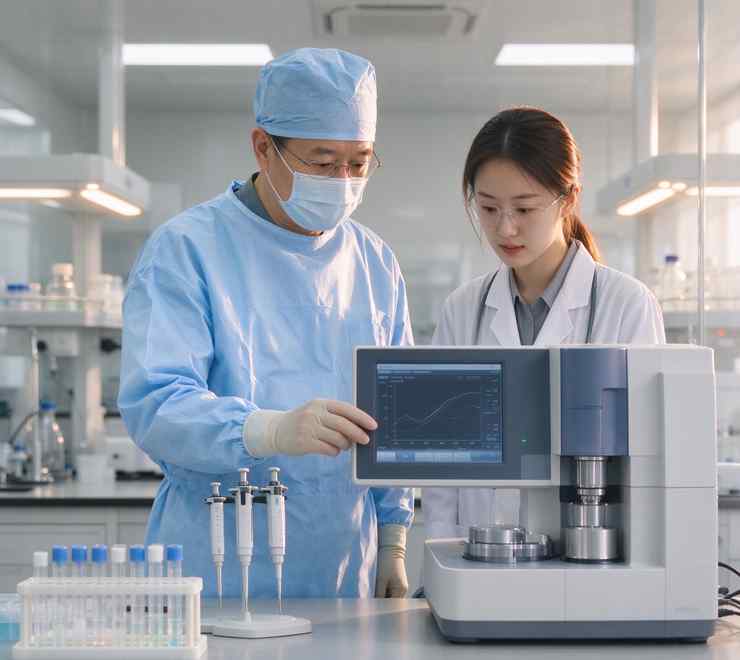
Chinese surgeons have been famous for decades, because they operate on a huge number of patients. But China used to lag behind on drugs — until recently, Chinese elites travelled abroad for the newest ones. That has changed. The numbers are unambiguous: in 2025, China accounted for nearly half of all new innovative-drug clinical trials worldwide (48%) [3], with more Phase I trials than any other country — about 47% of the global total, ahead of the United States [4]. In oncology, roughly 40% of the world's clinical trials ran in China, and Chinese companies ran more cancer-drug trials than their US counterparts [5]. China registered 2,997 new drug trials in 2025, saw 248 new drugs approved, and launched 30 new drugs first in the world — the newest medicines on earth reached Chinese patients before anyone else [6]. Its drug pipeline is about 30% of the global total, second only to the United States [7].
The machines caught up too. Ten years ago, GPS — GE, Philips, Siemens — dominated the medical imaging market. Even China's top-tier hospitals could only "afford the best." Today, domestic champions like United Imaging compete head-on with the foreign giants in premium territory — 3.0T and 5.0T MRI, ultra-high-end CT — and in frontier fields like ultra-high-field MRI and panoramic PET, China is at or near the world's technological frontiers. Even the most demanding doctors now rate China's top domestic equipment on par with the best imports [8]. The doctors are skilled, the machines are excellent, and the newest drugs now arrive in China first, or at the same time as anywhere else.
2And it's affordable
We start with the Big Mac Index: US$6.22 in America, versus ¥26.5 — about US$3.97 — in China [9]. The same sandwich you consume in China would have cost you 57% more in the US. Your money simply goes further here, in everything, including medicine.
Inflation barely exists: China's national CPI was flat in 2025 (0.0%), Shanghai's at 0.1% [10]. Shanghai's medical-and-health price index stood at 99.1 — meaning in 2025 local medical prices actually fell slightly from 2024 [11]. When Western healthcare inflation runs hot, Chinese prices have stayed flat.
Put it against the OECD numbers: the US spends US$14,885 per person per year; Canada about US$6,200; the OECD average US$5,967 [2]. China's per-capita spending is about US$764 per person (WHO, 2023) — roughly one-twentieth of the US level — yet the actual quality you can buy here, at top hospitals, out-of-pocket or through international clinics, is no longer a compromise. You are not paying less and getting less. You are paying less and getting the class act.
3Why Shanghai — not just “China”
China's good hospitals aren't only in Shanghai. But Shanghai takes care of medical visitors better than anywhere else in the country.
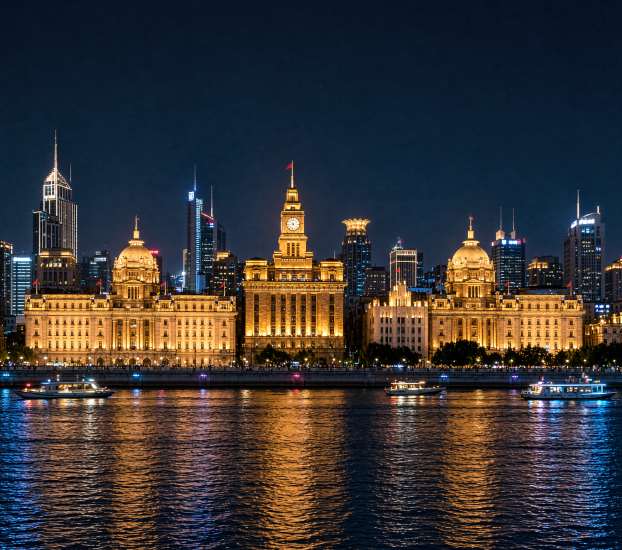
First, the economics. Shanghai's GDP per capita is about US$32,000 in 2025 — already in the range of the world's high-income cities — and its economy is nearly US$800 billion, among the top five city-economies on the planet [12]. Wealthy cities provide sufficient paying patients, and the best medical institutions are here. Shanghai is China's biggest medical market — and competition is intense. When an industry is big and contested, service quality is forced to improve. Good hospitals are made by demand and competition, not by slogans.
Second, accessibility: Shanghai has the densest, most extensive international flight network in China — you can fly in from almost anywhere in North America or Europe with one connection. The city also has the largest concentration of medical R&D firms and universities — which is why the best doctors gravitate here.
Third, rules. Privilege exists everywhere, but in Shanghai, rules, contracts and a sense of order are quietly built into how people behave. For a visitor, that means the fewest "unexpected surprises" of any megacity in the country. And Shanghai's international medical services are not a gilded service for the elite — they are built on scale and competition, which keeps them open and affordable.
A word about safety: China is now largely cashless, and petty street crime is extremely rare. Keep your street smarts — hustlers still target visitors, as they do anywhere else in the world — but for the most part, if you leave your purse unattended for half an hour at a crowded mall, it will still be there when you return.
4Shanghai feels closer than you think
Now the part that matters for your week, not just your procedure.
Shanghai has one of the largest expat communities in Asia. In Jinqiao, the Biyun International Community is home to expatriates from more than 50 countries and regions — so many that locals call it "the Mini United Nations" [13]. On any good-weather day, you'll see expat kids riding bikes along the tree-lined lanes, school backpacks on their shoulders, dogs running ahead — no different from a Toronto suburb.
On a Friday night, the terraces and bars of Xintiandi fill with young men and women of every nationality, fighting off bar noises with raised voices of varying accent and degree of intoxication — you can mistake it for Queen Street West in Toronto, just on a larger scale.
The point: the cultural distance is much shorter than the geographic one. You will recognize more than you expect — the food scene, the café culture, the way people queue, the way they argue. You won't feel like a stranger in a place you've never been to; you'll feel like a visitor in a city that's been waiting for you. Shanghai welcomed 7.23 million foreign arrivals in 2025, up 45% in a single year [14]. More and more people are figuring this out.
5Why us
You may not need us at all. If you have family or friends in Shanghai who can arrange everything — you don't need us. If your condition is slow-moving and you have months to explore the hospital system yourself — you probably don't need us either.
But if your condition, or your time, doesn't allow trial and error, we're worth talking to. We can help because:
- We know the system better than you do. We don't know your medical condition — that is your doctor's job — but we know which hospital and which team has the right skills and attitude to take care of you. To the hospitals, you are a single visiting patient, but we show up as locals and repeat customers.
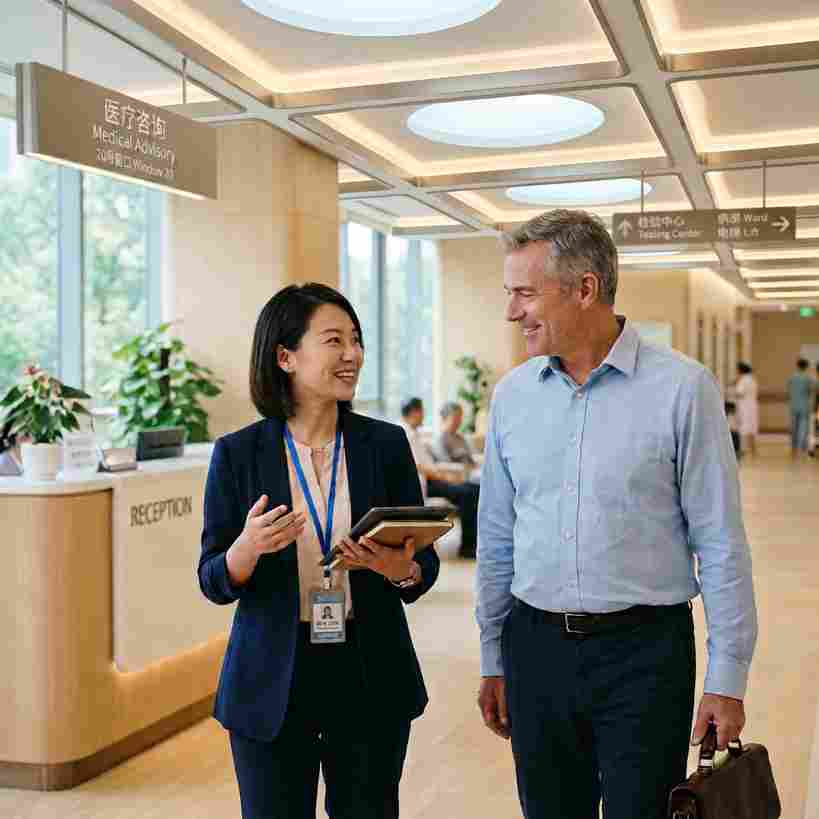
- We're here, so we can take care of logistics more easily than you can. Booking, translation, admission, settlement, discharge paperwork — we run these errands for you, at very low cost.
- We speak for you. Alone against a hospital system, your voice is small. We stand on your side — for time, for arrangements, for fair treatment. Every client's experience becomes ours and yours; that volume gives us clout, and you get better responses from the system.
We go by two rules: first, we advise, but we never decide — your doctor knows medicine, you know your own body; we lay out options, costs and timelines, and the decision stays yours. Second, we charge you a transparent coordination fee, plainly priced. It does not matter to us whether you eventually choose a premium medical service or a no-frills one; we only care that you value our service and keep hiring us, day after day. You pay us for coordination; you pay the hospital directly for medical care. Clean and separate. Simplicity keeps us focused and disciplined, and hopefully, makes your dealing with us more comfortable.
Start with a free consultation. Send us your reports, redacted to remove your full name if you wish — we will take a look, and come back to you with a workable plan or a reasonable starting point — no obligation, no hurry. We won't call you unless you ask us to.
And if you do come, you arrange your own flights, we handle everything else.